.png)
Paul’s Plan for Burlington: 2026–2030
Experience that works for you. A city that works for everyone.

One Plan — Nine Commitments
A balanced approach to growth, affordability, and community well-being in Burlington.

1. Property Taxes & Affordability
Protect what matters. Control operating costs. Fund the infrastructure we need. Deliver better value.
Burlington must bring growth in the operating cost of existing City services back toward inflation while continuing to invest responsibly in the infrastructure residents already own.
The City currently adds approximately 2% each year for infrastructure renewal, over and above normal inflationary pressures. I support continuing that investment. Roads, stormwater systems, parks and community facilities cannot be maintained by postponing necessary work and passing the bill to future taxpayers.
That makes controlling the rest of the budget even more important. I will challenge operating costs, require stronger business cases for new spending, use technology and AI to improve productivity, redesign expensive services where better models exist and demand measurable results for taxpayers’ money.
Fund what we must. Challenge what we can. Measure the results. Deliver better value for every tax dollar.

2. Reduce Traffic Congestion
Keep highway traffic on the highways.
Too much congestion on Burlington streets is caused by traffic leaving the QEW and using our major roads and neighbourhoods as alternative highway routes.
I will continue advocating for provincial improvements to the QEW and its interchanges through Burlington, as well as a long-term solution to the Burlington Bay bottleneck through increased bridge capacity or consideration of a tunnel.
At the same time, smarter adaptive traffic signals, Halton’s Advanced Traffic Management System, better coordination with highway conditions and practical measures to discourage neighbourhood shortcuts can help us get more capacity from the roads we already have.
Keep highway traffic on the highways. Use technology to keep our roads moving. Protect our neighbourhoods. Give residents better transportation choices.

3. Condominium Boom Changes
Understand the new housing reality.
For much of the last decade, Burlington planned for very substantial population growth driven heavily by high-density condominium development.
The market has changed dramatically.
New condominium sales have fallen sharply, substantial completed and under-construction inventory remains unsold, and the investor-driven pre-construction model that financed much of the previous condominium boom is no longer functioning as it once did.
Burlington must continue creating opportunities for future housing. But:
Planning approvals are not housing starts.
Housing targets are not construction schedules.
A development pipeline is not the same as probable near-term development.
This matters because decisions about roads, transit, parks, community facilities and other infrastructure should increasingly reflect what is actually being built—not simply what could theoretically be built.

4. Modernize Burlington Transit
Better service. More riders. Less costly underutilization.
While Burlington Transit currently serves students, seniors and some commuters, it remains substantially underutilized by many potential passengers.
Our working objective should be ambitious: determine whether a redesigned system could attract approximately 10,000 additional passenger trips each day, roughly doubling current ridership.
My long-term objective is better service, substantially better vehicle utilization and working toward eliminating—or coming as close as reasonably possible to eliminating—Burlington Transit’s approximately $26.6 million annual funding deficit.
Instead of asking residents to organize their lives around the bus, organize transit around the passenger.
%20(3).png)
5. Make Growth Pay Its Way
Growth must bring the infrastructure and services it requires.
New development creates additional demand for roads, transit, parks, recreation, stormwater systems, fire services and other municipal infrastructure.
Existing residents should not be expected to carry an share of those costs.
Burlington should recover growth-related costs to the greatest extent reasonably and legally possible, understand the lifetime operating and replacement costs of new infrastructure, and ensure infrastructure keeps pace with development.
But timing matters too.
We should not build major infrastructure years ahead of demonstrated demand simply because an earlier forecast predicted development would arrive sooner.
Build what we need, when we need it. Make growth pay its fair share. Don’t make existing residents pay twice.

6. Safety & Home Security
Residents should be safe—and they should feel safe.
Halton Regional Council has made substantial additional investments in the Halton Regional Police Service in response to concerns about auto theft, home break-ins and organized property crime.
I supported those investments.
Early results are encouraging, including significant reductions in auto theft and break-and-enter.
But after substantial increases in police funding, taxpayers are entitled to measurable results.
Are crimes declining? Are offenders being caught? Are response times improving? Are police more visible where residents need them? And most importantly, do residents actually feel safer?
We have invested in policing. Now we must make sure that investment produces sustained reductions in crime and safer neighbourhoods.
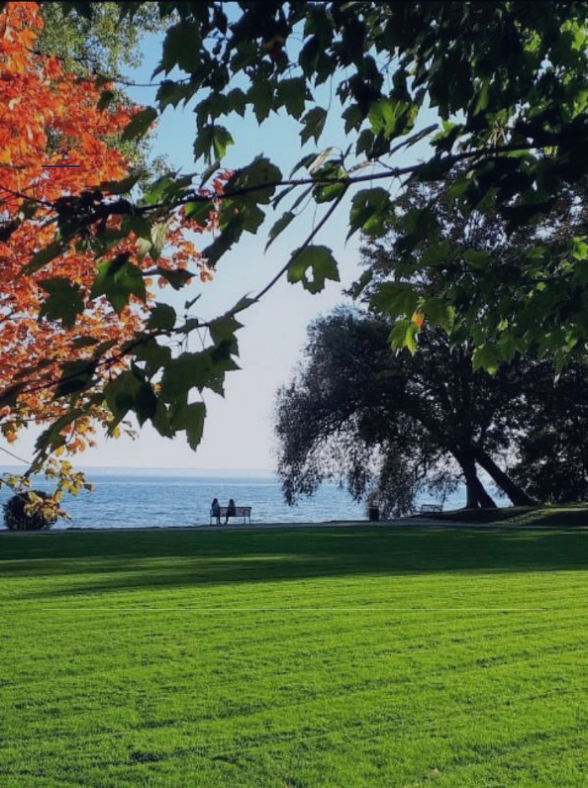
7. Protect & Expand Parks
Great parks build great communities.
Burlington’s parks, trails, woodlands and green spaces are essential community infrastructure.
They support recreation, healthy living, children’s development, organized sports, social connection and our environment.
I am proud of major investments we have made in Ward 5, including Sherwood Forest Park, Burloak Waterfront Park, John W. Boich Parkette and DesJardines Park.
The next challenge is to continue maintaining what taxpayers already own while adapting our parks to changing community needs, strengthening the tree canopy, improving accessibility and ensuring recreation and green space keep pace where development actually occurs.
Protect what we have. Improve what needs renewal. Expand opportunities for recreation and green space.
%20(1).png)
8. Climate Resilience
Protect. Adapt. Reduce. Measure.
Burlington’s natural environment — from the Niagara Escarpment and rural lands to our parks, tree canopy, creeks and Lake Ontario waterfront — is fundamental to our quality of life.
Climate resilience is also a practical issue. Burlington has experienced serious flooding, severe storms and extreme weather, reminding us that protecting homes, infrastructure and our natural environment requires continued investment and long-term planning.
We must protect our rural lands, parks, natural areas, creeks, watersheds and waterfront while strengthening flood protection, stormwater systems, the urban tree canopy and resilient infrastructure.
I support Burlington’s 2040 net-carbon-neutral objective for municipal operations and the 2050 community objective, while ensuring that the actions we take are practical, affordable and capable of producing measurable results.
Modernizing transit can contribute too. Smaller, on-demand and increasingly electric vehicles could improve service, attract more riders, reduce costly underutilization and progressively lower emissions.
Protect what we have. Adapt our infrastructure. Reduce emissions where we can make a meaningful difference. Measure the results and adjust when better solutions become available.

9. Long-term Planning
Think long term. Plan realistically. Invest when needed. Measure the results. Adjust when circumstances change.
In 2015, I was instrumental in establishing Burlington’s 25-year strategic planning approach because many decisions made by Council affect residents for generations.
That approach has now evolved into Horizon 2050, Burlington’s new long-term Strategic Plan.
Long-term planning does not mean pretending we can accurately predict exactly what Burlington will look like decades from now.
Population changes.
Housing markets change.
Technology changes.
Transportation patterns change.
Economic conditions change.
Our plans must change with them.
That is why the 25-year vision must be connected to Burlington’s rolling five-year financial outlook and to current evidence about what is actually happening in our community.
Set a long-term direction. Understand where Burlington is actually going. Invest when the evidence says we need to. Measure the results. Adjust when circumstances change.
And always ask:
Will this decision leave Burlington stronger for the generation that follows us?